What a Buck Taught Me
I had witnessed this buck for the first time a week prior to this encounter.
Since then, every time I drove slowly down that gravel road, my eyes searched the edges — tall grasses, brush lines, pockets of cover where he might be feeding. Mature white-tailed bucks rarely stand out in the open during daylight. Survival has taught them otherwise.
And then — there he was.
Not in a clearing. Not in golden light.
But deep in tall brush and trees, almost hidden.
White-tailed bucks rely on edge habitat — the meeting place between open field and dense cover. It gives them both food and protection. During much of the year, they conserve energy and avoid unnecessary exposure. Remaining partially concealed allows them to observe everything before stepping fully into view.
I had to be strategic. Every movement mattered.
I didn’t want a door to creak.
Not the click of gear shifting.
Not even the subtle shift of gravel under tires.
Wildlife often reacts not to sight first, but to sound. And a buck that feels pressured may relocate entirely.
I spotted a narrow opening in the brush — just enough for my long lens to reach him without my presence becoming part of his awareness.
As I write this now, step by step, it sounds slow and deliberate… but it happened fast.
I parked.
Shut off the van.
Quietly opened the door.
Set up my camera while still inside.
And began filming.
He looked at me a couple of times — not alarmed, just aware. Deer constantly assess their surroundings. That steady gaze wasn’t curiosity. It was calculation. Distance. Wind direction. Risk.
Minutes felt like hours.
He was majestic.
Eventually, he moved on as I did.
But “making memories” doesn’t quite capture it.
What stayed with me wasn’t just his antlers or his size
It was what he taught me-
That stillness is strength.
That awareness is constant.
That survival often looks like patience and restraint.
I learned that sometimes the most powerful wildlife encounters are not the ones where animals perform — but the ones where they simply remain.
And we are allowed to witness it.
If you’d like to see this encounter unfold in real time, the full video is linked below. I invite you to step quietly into that moment with me.
Quiet Presence — Slow Seeing.
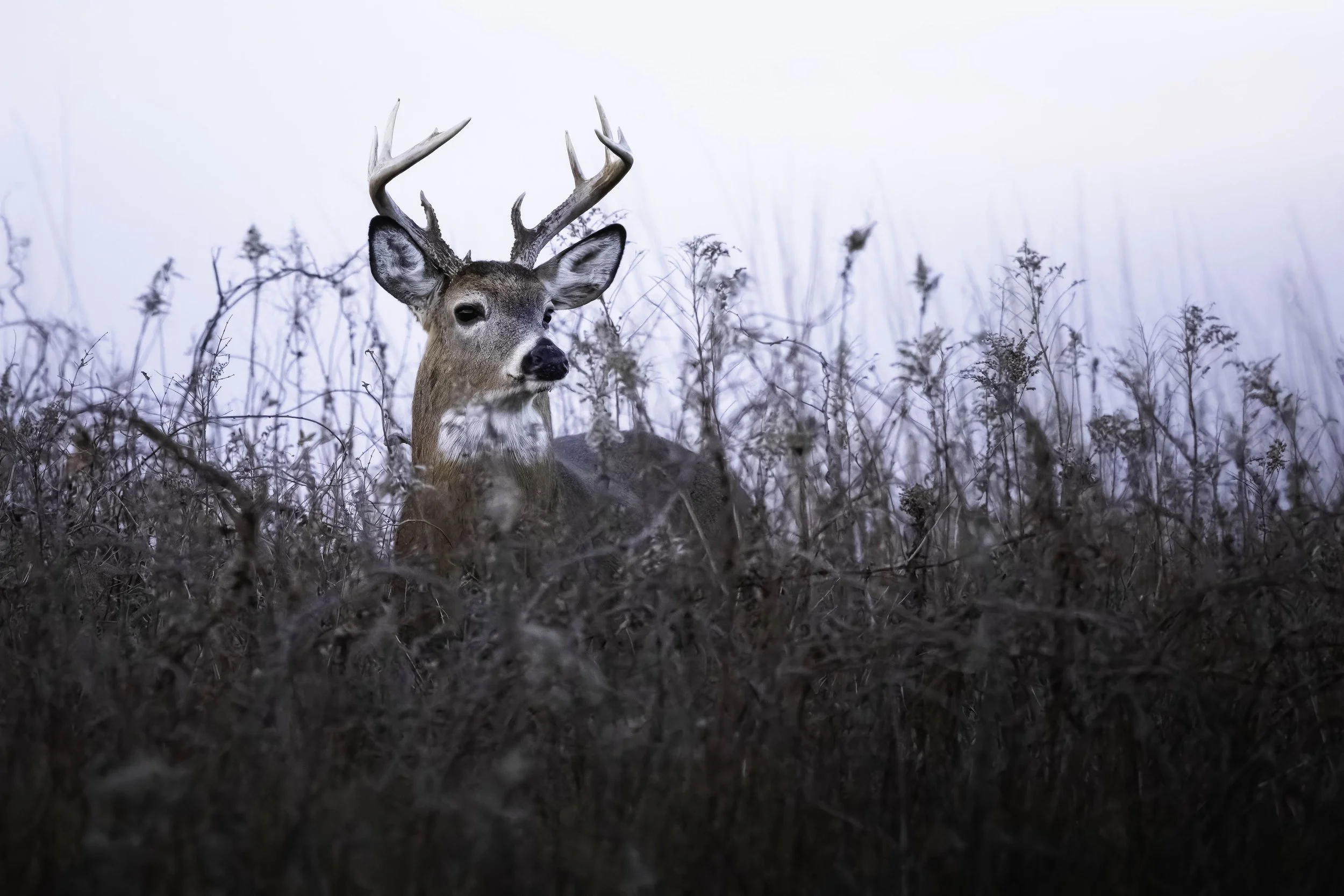
He stood partially hidden in the fall brush — alert, aware, and not yet ready to step fully into view.
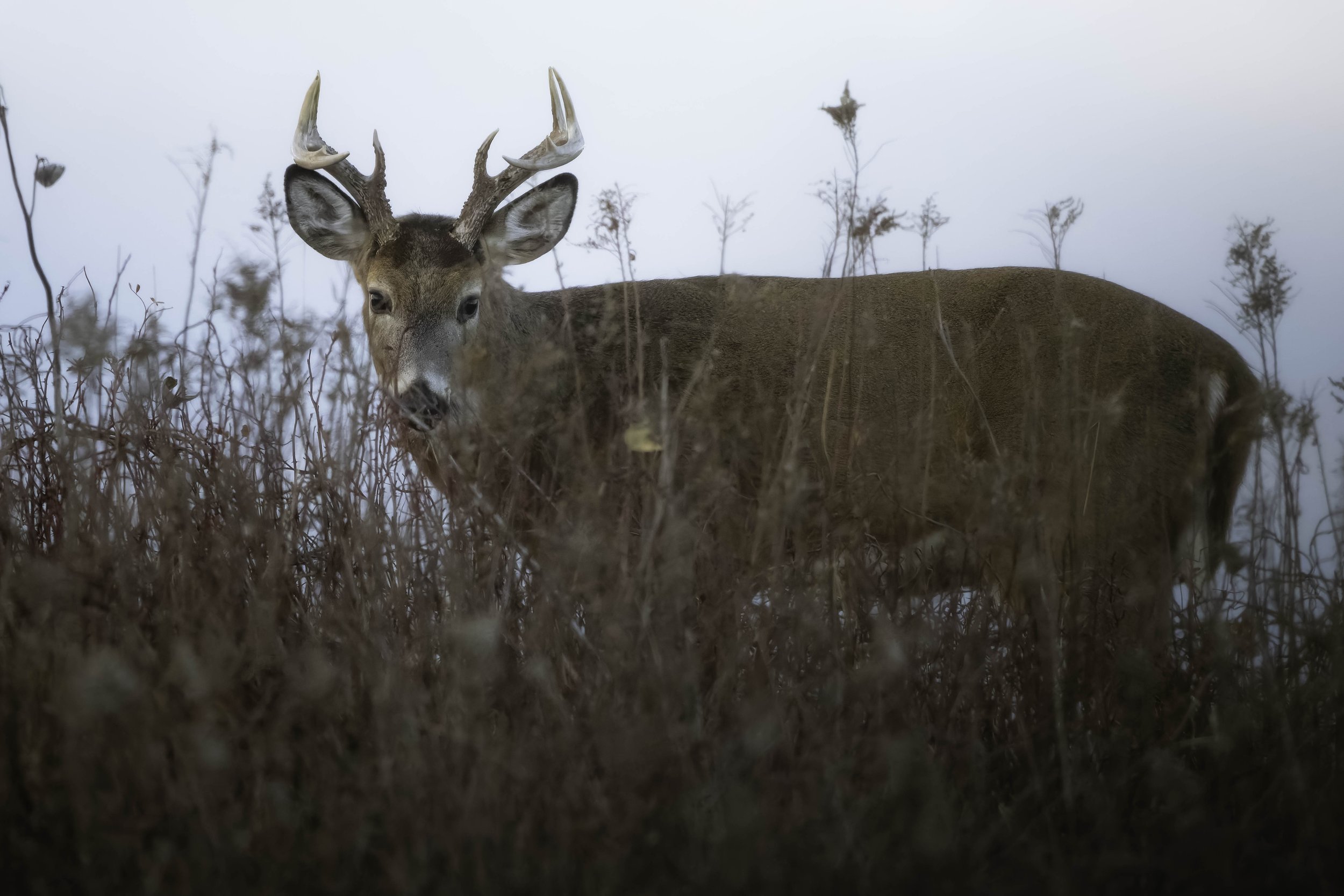
Even while feeding, his eyes never left the surroundings — a quiet lesson in awareness.
When he finally looked directly at me, the moment felt less like a sighting and more like a meeting
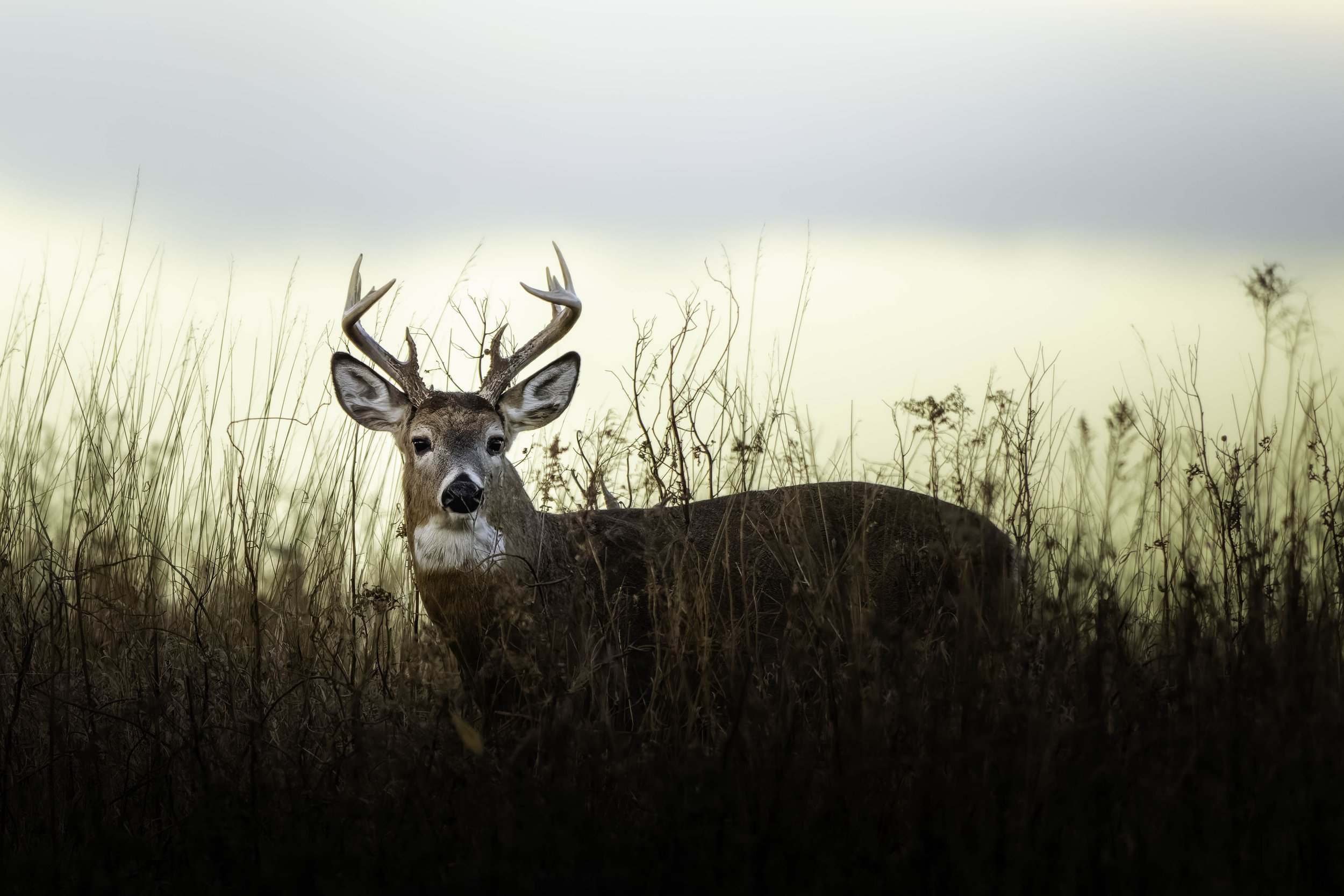
This quiet encounter with a mature white-tailed buck unfolded in the fall brush of a Massachusetts wildlife refuge. Watch the full film and step into the stillness of this reflective wildlife moment.